The cybersecurity community must resist the temptation to treat AI as a panacea.
Artificial intelligence has become the loudest word in every boardroom, every vendor pitch deck, and every security conference keynote. And yet, after years of working on the offensive side of the equation, I find myself increasingly concerned that the industry is sleepwalking into a false sense of security.
Let me be direct: AI is reshaping the threat landscape faster than defenses are being built. Adversaries — state-sponsored groups, ransomware operators, and opportunistic hackers alike — are already leveraging large language models to craft more convincing phishing lures, automate reconnaissance, and accelerate vulnerability discovery. The asymmetry here is dangerous. Attackers iterate quickly, operate in the dark, and face no compliance requirements. Defenders are constrained by procurement cycles, regulatory frameworks, and organizational inertia.
What troubles me most is not the sophistication of AI-powered attacks — it’s the overconfidence of AI-powered defenses. Organizations are deploying AI-driven security tools without understanding their blind spots. Models trained on yesterday’s threat data will fail against tomorrow’s novel techniques. Adversarial inputs, model poisoning, and prompt injection are not theoretical — they are active attack vectors that the security community is only beginning to grapple with.
My message is not one of despair — it is one of urgency. AI, used thoughtfully, can genuinely augment human defenders: automating triage, correlating signals at scale, and assisting red teams in uncovering systemic weaknesses before real adversaries do. But it must be paired with adversarial thinking, continuous red teaming, and ruthless honesty about its limitations. The organizations that will weather this era are not those with the most AI tools — they are those with the clearest eyes about what those tools cannot do.
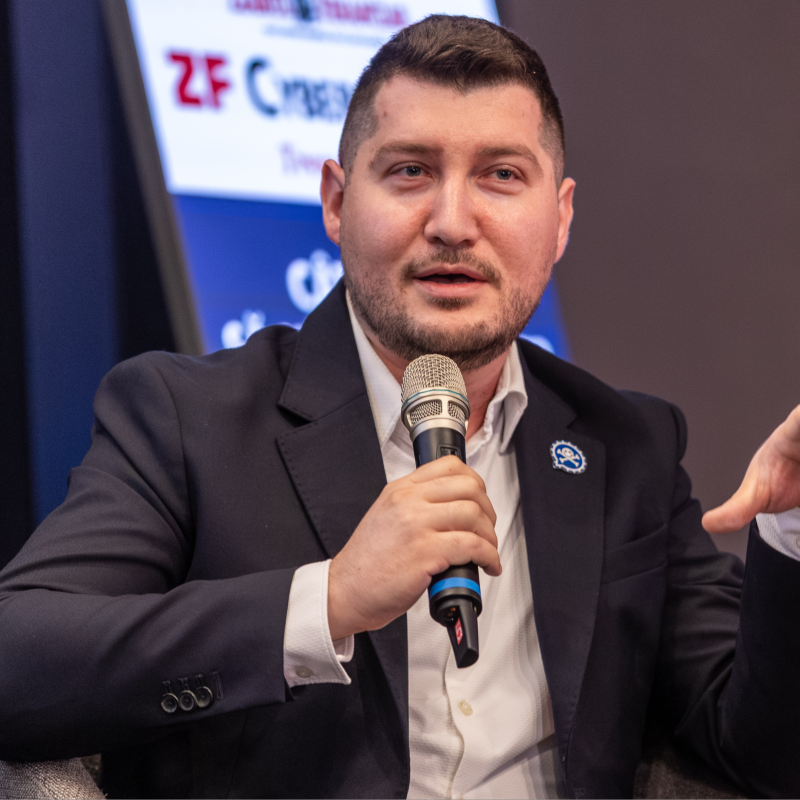
Dragos Ionica
Offensive Capability Lead, Deloitte Romania