There used to be two kinds of professionals: those who read everything and had no time left for anything else, and those who barely read at all and quietly fell behind. A third type is emerging now… and they’re growing fast.
They’re the ones who figured out that social media plus AI isn’t a distraction. It’s an accelerated learning system that most people around them haven’t discovered yet.
A few years ago, if you wanted to understand a shift in your industry (say, how new EU regulations might affect SaaS pricing models) you had two options: spend a few hours researching, or wait for a decent article to land in your inbox. Both cost time. Today, a professional with a well-curated feed can spend twenty minutes in the morning and come away with a clear picture of how ten industry leaders think about that exact question. Then ask an AI to surface the real tensions underneath the surface-level debate. Then walk into their first meeting of the day with an actual opinion, not just raw information.
That’s the shift. Not the speed of information. The speed of understanding.
“You don’t need to read everything anymore. You need to ask better questions.”
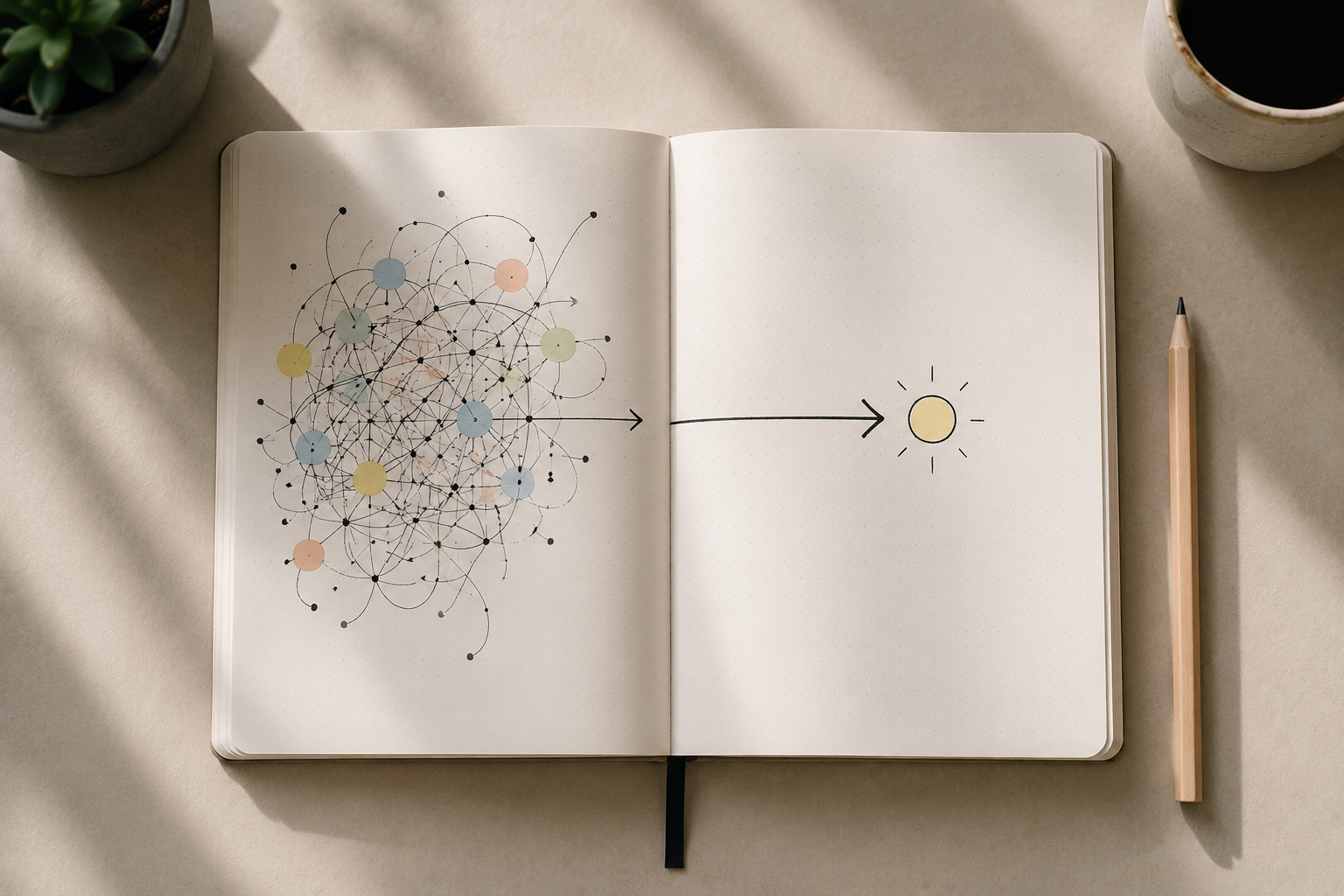
The most useful thing you can do right now isn’t consume more content… it’s consume better content, faster, and process it actively. AI becomes the layer in the middle: the thing that transforms what you saw into what you actually grasped. You spot an interesting thread on X. Ten posts, conflicting perspectives, some of them genuinely sharp. You paste the key arguments into a model and ask it to map where the real disagreements lie. Five minutes later you have a mental framework that would have taken days to build through passive reading alone.
Social media becomes the raw material. AI becomes the refinery.
There’s a trap in all of this, though. And it’s worth naming. When you learn faster, it’s tempting to believe you know more than you do. Summaries are useful; they don’t replace depth. A professional who has skimmed ten AI-generated recaps on machine learning doesn’t have the same understanding as someone who worked through three technical books and built something with the concepts. Speed without depth produces the illusion of competence, not competence itself. The best use of these tools isn’t to replace deep reading. It’s to figure out what deserves to be read deeply.
“Use AI to find what’s worth your time, not to avoid giving things your time.”
The professionals who seem perpetually well-informed tend to share a pattern. They don’t spend more time on social media: they spend it more intentionally. Clean feeds, people who think rather than people who post frequently, and one consistent habit: they don’t scroll passively. They note, question, synthesize. AI has made that last step so accessible it’s no longer a competitive advantage to do it. It’s becoming a disadvantage not to.
The tools exist. The platforms exist. The content exists… in greater volume than ever. The only remaining differentiator is how deliberate you are about what you choose to understand, not just consume. For those who get that distinction, the learning curve has genuinely tripled. For everyone else, social media stays what it always was: an occasional source of value wrapped in a lot of noise.
That’s not a technology choice. It’s a mindset one.
Cezara Mîndrescu
Researcher in Digital Communication, Artificial Intelligence, and Institutional Communication